Professional Japanese Knotweed Specialists
Japanese Knotweed Identification Guide
Learn how to identify Japanese knotweed through the different stages of growth, from early spring shoots to winter canes.
Knotweed Doctor provides practical identification advice for homeowners, buyers, sellers, developers and property professionals, with formal surveys available where professional confirmation is needed.
Need Help Identifying Japanese Knotweed?
Call 0800 020 9171
info@knotweeddoctor.co.uk
Contact Us

How to Identify Japanese Knotweed
Japanese knotweed changes noticeably through the year, which is one reason it is often misidentified. Depending on the season, the plant may appear as red asparagus-like shoots, lush green shield-shaped leaves, hollow bamboo-like stems, white flower clusters or dead brown canes.
Key features to look for include purple or green shoots in spring, vivid green spade or shield-shaped leaves, a zig-zag leaf pattern, bamboo-like stems with purple speckles, white or cream flower clusters, orange-yellow rhizome and dead winter canes.
How Japanese Knotweed Changes Through the Year

1. Spring Shoots
In early spring, Japanese knotweed emerges as red or purple asparagus-like shoots. These are often one of the first signs of knotweed returning after winter.

2. Young Knotweed Plant
As growth develops, the leaves open out and quickly turn green. Young plants can spread fast along walls, paths and property boundaries.

3. Zig-zag Leaf Pattern
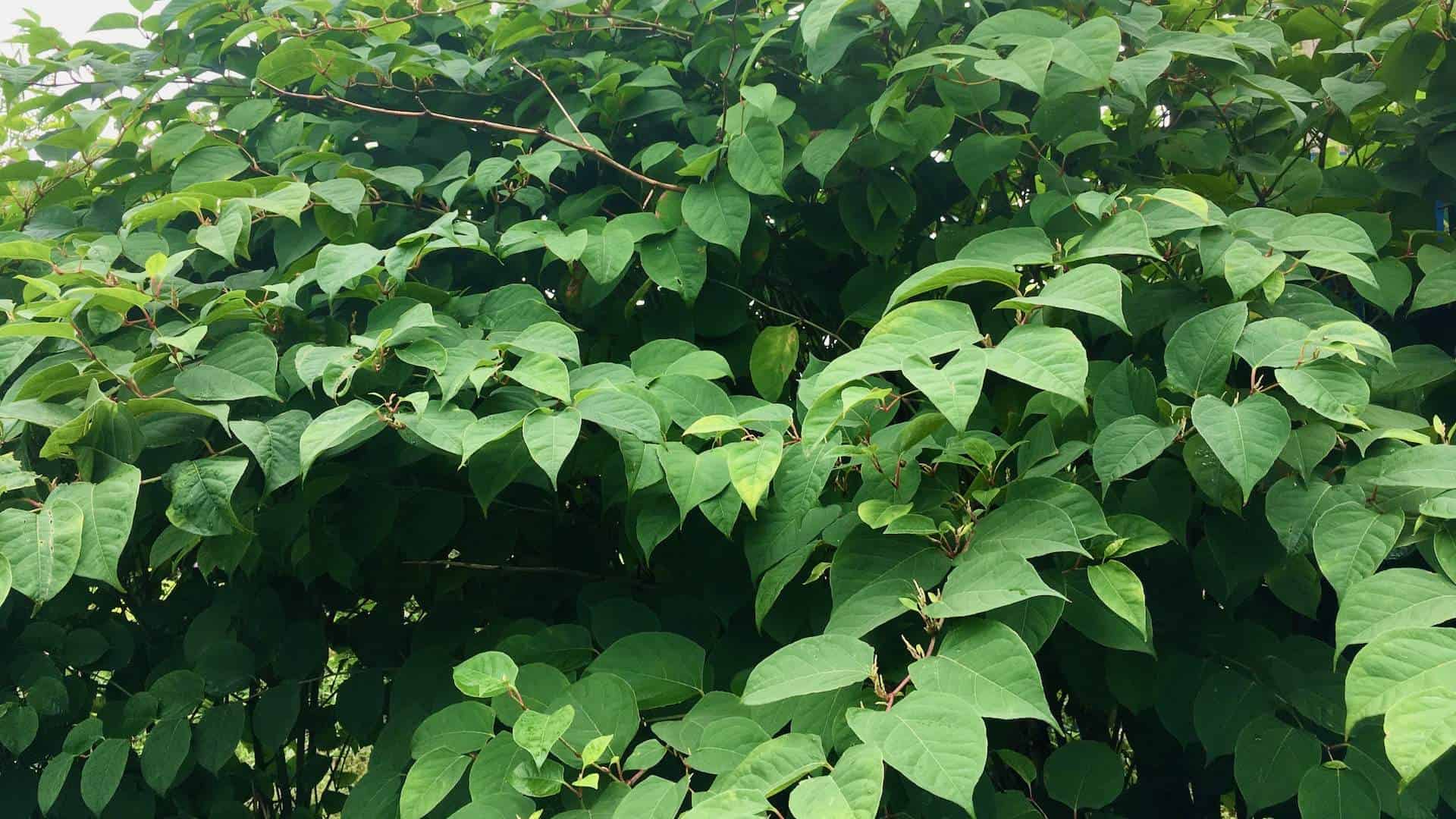
One of the classic identification clues is the way the leaves grow on alternate sides of the stem, creating a distinctive zig-zag pattern.
4. Shield-Shaped Leaves
Mature leaves are typically spade-like or shield-shaped with a flatter top edge and a pointed tip. This is one of the most useful identification features.
5. Bamboo-like Stems
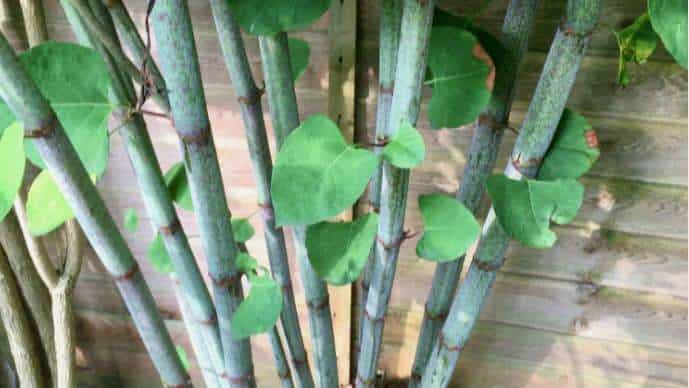
By early to mid-summer, mature hollow stems become greener and often show purple or reddish speckling, giving the plant its bamboo-like appearance.
6. Late Summer Flowering
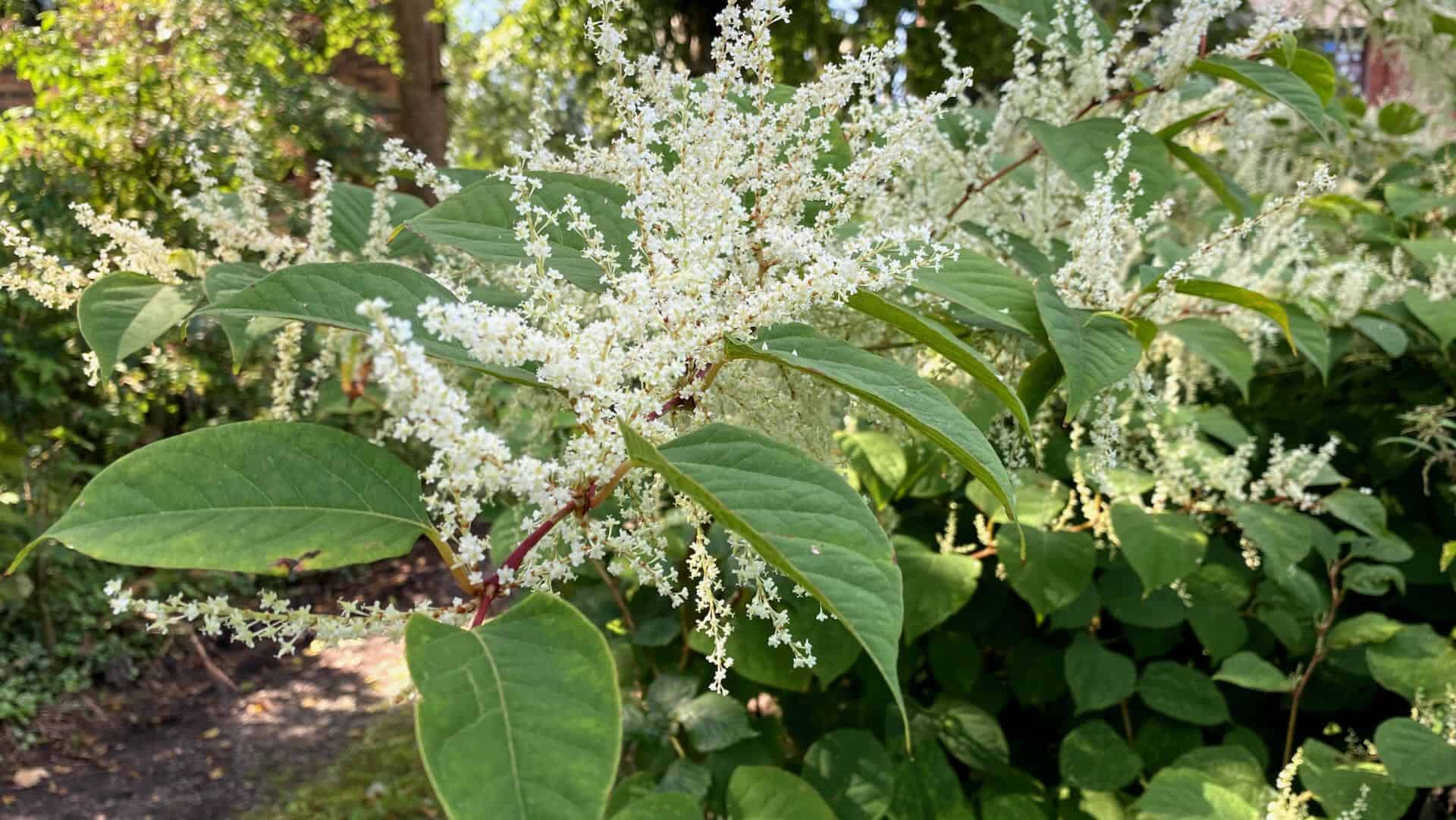
In late summer, Japanese knotweed develops clusters of small white or cream flowers. This is often when the plant is most visually distinctive.
Rhizome & Winter Canes

Japanese Knotweed Rhizome
Japanese knotweed spreads mainly through its underground rhizome system. When cut open, the rhizome often shows a distinctive internal tri-colour pattern that can help with identification. The rhizome snaps similar to a carrot and has a musty smell.
- Dark brown and orange outer skin
- Bright orange or yellow inner tissue
- Deep orange central core
This brown, orange and yellow colouring is a strong indicator that the material may be Japanese knotweed rhizome rather than a typical root. Even small rhizome fragments can regrow if disturbed or moved.

Winter Canes
In late autumn and winter, Japanese knotweed dies back above ground and is often left as dry brown canes, as it takes the nutrients back into its rhizome system. Although the plant appears inactive, the underground rhizome is usually very much alive below the surface.
These dead canes are still useful during a survey because they can help indicate previous growth, confirm the extent of an old infestation and support identification outside the main growing season.
Why Japanese Knotweed Is Often Misidentified
If you are buying or selling a property and Japanese knotweed is suspected, a professional survey may be required by your lender. Read our guide to Japanese Knotweed and Mortgages for further information.
It changes through the year
The plant looks very different in spring, summer, late summer and winter, which is why seasonal context matters.
Several plants can look similar
Many homeowners confuse knotweed with other fast-growing plants, especially when only one stage of growth is visible.
Property context matters
The significance of a plant is not just about what it looks like, but where it is growing and how close it is to boundaries, walls and structures.
Formal confirmation may be needed
If a sale, purchase, mortgage or development is involved, informal identification is often not enough and a professional survey may be required.
Plants Commonly Mistaken for Japanese Knotweed
Japanese Knotweed is often confused with other fast-growing plants, especially in spring and summer. While some species may look similar at a glance, Knotweed usually stands out through its combination of red or purple spring shoots, bamboo-like hollow stems with distinct nodes, zig-zag growth, shield-shaped leaves, and a bright orange centre within the rhizome when cut.
Bindweed
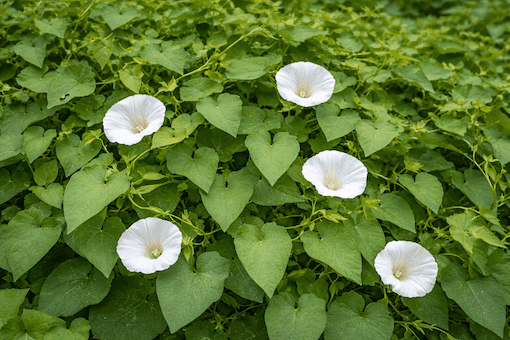
Bindweed is a climbing plant that twines around fences, shrubs, and other plants. Unlike Japanese Knotweed, it does not form thick upright canes or woody crowns, and its leaves are more arrow-shaped than shield-shaped.
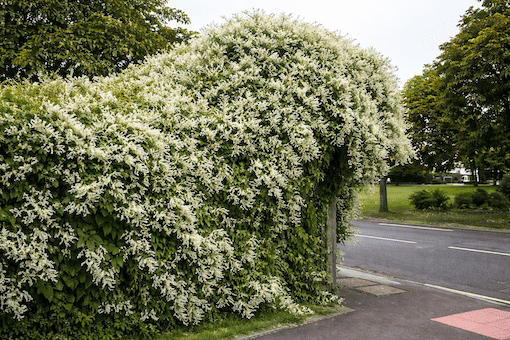
Russian Vine
Russian vine grows rapidly and can create dense coverage, but it is a scrambling climber rather than a plant with upright bamboo-like stems. Its growth habit is much looser and more vine-like than Japanese Knotweed.
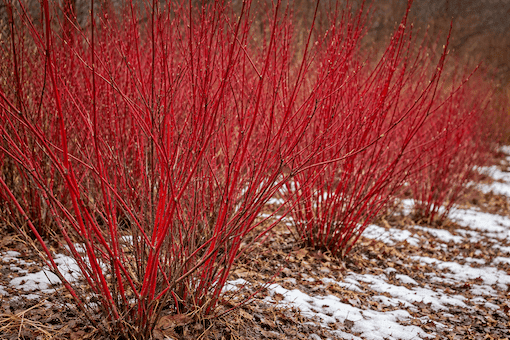
Dogwood
Some dogwood varieties have reddish stems that can cause confusion in winter. However, dogwood is a shrub with woody branching stems and does not produce the hollow, jointed canes or thick rhizome system associated with Japanese Knotweed.
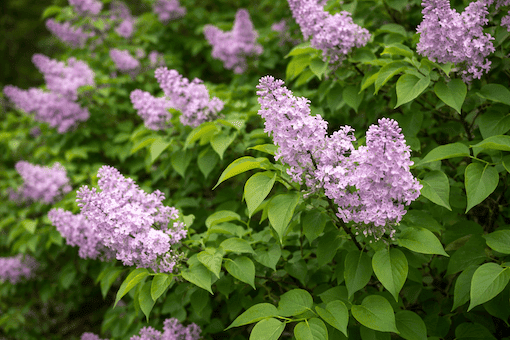
Lilac
Lilac can sometimes be mistaken for Knotweed when young shoots emerge, but it develops as a woody shrub with a very different stem structure. Its leaves and branching habit are also more typical of a garden shrub than an invasive perennial weed.
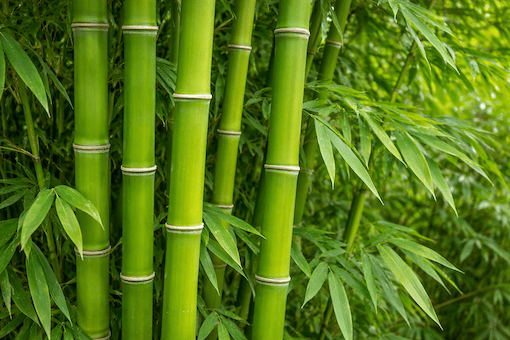
Bamboo
Bamboo is one of the most common comparisons because it also has tall canes with nodes. The key difference is that Japanese Knotweed usually has zig-zag stem growth, broad shield-shaped leaves, and dies back in winter, leaving brittle dead canes rather than a permanent evergreen screen.

Why professional identification matters
Misidentification is common, and treatment decisions should not be based on appearance alone. If you are unsure whether a plant is Japanese Knotweed, we can assess photographs or arrange a site survey to confirm identification and advise on the next step.
What Happens Next?
Correct identification is the first step. If Japanese knotweed is present, the next step will depend on whether you are buying a property, selling a property, dealing with a mortgage lender, or simply want professional advice on managing the infestation.
Our experienced surveyors can confirm the presence of Japanese knotweed and provide practical recommendations tailored to your situation.
Still not sure what you’re looking at?
Send us a photo and we’ll give you a fast, professional opinion.
Get Identification Help
No obligation — quick response from a specialist.
Frequently Asked Identification Questions
What does Japanese knotweed look like in spring?
It usually starts as red or purple asparagus-like shoots which quickly develop into green leaves.
What shape are Japanese knotweed leaves?
Typically spade-like or shield-shaped, with a flatter top edge and a pointed tip.
Does Japanese knotweed flower?
Yes. Small white or cream flower clusters usually appear in late summer.
What does Japanese knotweed rhizome look like?
When cut open, the rhizome often shows dark brown outer skin, bright orange or yellow interior tissue and a dark orange central core.
What does Japanese knotweed look like in winter?
The leaves die back and the plant is often left as brown, woody canes while the rhizome remains dormant but alive below ground.
Do I need a professional survey to confirm knotweed?
If a property sale, purchase, mortgage or development is involved, a professional survey is often the safest and most reliable next step.
Professional Standards & Accreditation
Knotweed Doctor is committed to professional standards, clear reporting and responsible advice for residential and commercial clients.
Professional Standards
Supporting clear, professional guidance for property-related knotweed issues.
Specialist Knowledge
Experienced in identification, surveys and knotweed-related reporting.
Trusted Service
Helping clients make informed decisions with practical and reliable advice.








Japanese Knotweed Identification by Area
If you need local help identifying Japanese knotweed, choose your nearest area below. Each local page explains our identification and survey support for that location.
Call 0800 020 9171
info@knotweeddoctor.co.uk
Contact Us